

In the United Kingdom, document certification plays a vital role in confirming that copies of important paperwork are genuine and accurate reproductions of the originals. Whether applying for a passport, opening a bank account, submitting immigration paperwork, or handling court matters, individuals are often asked to provide certified copies. This raises a common and important question: who can certify documents for legal and official use? More from us: Surgical Negligence in the UK.
Paperwork is accepted without delay when it has been certified correctly and meets the specific requirements of the requesting authority. Even minor errors such as missing signatures, incomplete professional details, or incorrect wording can result in rejection and unnecessary processing delays.
This comprehensive guide explains the UK framework, identifies authorised professionals, and outlines how certification works in practice. It also clarifies the legal standards behind document verification, highlights the differences between certification and notarisation, and provides practical advice on choosing the appropriate certifier for different situations, such as passport applications, financial transactions, court proceedings, and international use.
| Category | Details | Key Requirements | Common Use Cases | Notes |
| Solicitor | Regulated legal professional authorised to certify copies | Must be SRA-regulated; include signature, date, and firm details | Property transactions, court documents, passport copies | Widely accepted across UK institutions |
| Notary Public | Specialist in document authentication, especially for overseas use | Official seal and signature required | International business, foreign property, overseas employment | Often required for apostille/legalisation |
| Commissioner for Oaths | Authorised to administer oaths and certify documents | Must confirm the document is a true copy | Affidavits, statutory declarations | May also be a solicitor |
| Doctor or Dentist | Medical professional in good standing | Must not be related to the applicant | Passport identity confirmation | Not always accepted for legal filings |
| Teacher or Lecturer | Recognised education professional | Must have known applicant (for passport cases) | Passport and identity verification | Limited to specific uses |
| Bank Manager | Senior banking official | Must confirm identity verification | Mortgage or loan documentation | Acceptance varies by institution |
| International Legalisation (If Required) | Additional authentication beyond certification | Apostille under the Hague Convention | Overseas legal use | Certification alone may not be sufficient |
What Does It Mean to Certify a Document?

Certifying a document means confirming that a copy is a true and accurate representation of the original. The authorised person typically:
- Compares the copy with the original document
- Confirms that it is a true likeness
- Signs and dates the copy
- Adds professional details (name, position, contact information)
In some cases, they may also affix an official seal to the document. Certification does not verify the truthfulness of the content; it simply confirms the authenticity of the copy.
Why Document Certification Is Required
Certified copies are often required in various serious situations to ensure authenticity and proper verification. For instance, when submitting passport applications, applying for visas or immigration status, or opening bank accounts, certified documents are essential for confirming identity. Similarly, when registering with professional bodies or completing property transactions, these copies provide the necessary legitimacy to the process.
Additionally, filing court documents typically requires certified copies to meet legal requirements. Authorities mandate the use of certified documents to reduce fraud and enhance identity verification, thereby protecting both individuals and institutions from the risks of misrepresentation.
Who Can Certify Documents in the UK?
The answer to who can certify documents depends on the document’s purpose and the organisation requesting it. Generally, certification must be completed by a recognised professional or individual in a position of responsibility.
Commonly Accepted Professionals
In most cases, the following individuals can certify documents:
- Solicitors
- Notaries public
- Commissioners for oaths
- Chartered accountants
- Doctors
- Teachers
- Bank managers
- Police officers
- Members of Parliament (MPs)
- Dentists
However, the certifier must not be related to you, live at your address, or have a personal interest in the matter.
Solicitors and Notaries: The Most Widely Accepted Authorities
When in doubt about who can certify documents, solicitors and notaries public are the safest options.
Solicitors
Solicitors regulated by the Solicitors Regulation Authority (SRA) are widely accepted for various certification needs, including passport certification, legal proceedings, property transactions, and financial documentation. It’s important to note that they may charge a fee for their certification services, which can vary depending on the complexity of the documents involved and the specific services rendered.
Notaries Public
Notaries public specialize in verifying documents intended for international use, making their role particularly significant in certain contexts. For instance, they are essential when documents are required for use abroad, when apostilles are needed, or when cross-border legal matters are involved. Notaries are regulated separately from solicitors and often provide additional layers of authentication, further ensuring the legitimacy of the documents they certify.
Certification for Financial and Banking Purposes
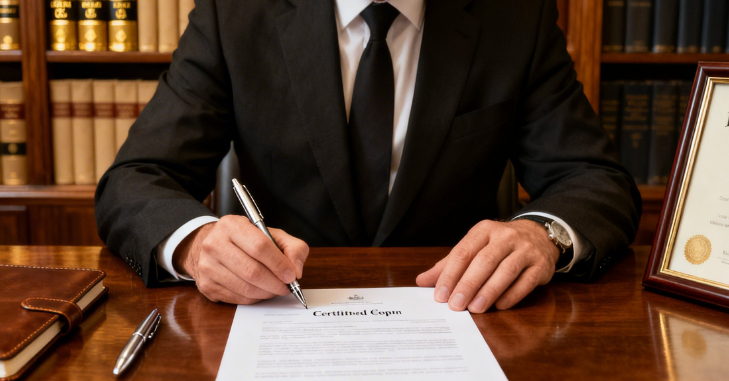
Banks often require certified copies for:
- Anti-money laundering compliance
- Mortgage applications
- Company registration
- Loan documentation
Financial institutions typically accept certification from regulated professionals.
Accepted Authorities and Their Typical Use Cases
| Professional | Common Uses | International Acceptance | Typical Fee | Regulation Body |
| Solicitor | Legal, passport, property | Limited (UK-based) | Yes | SRA |
| Notary Public | Overseas documentation | High | Yes | Faculty Office |
| Chartered Accountant | Financial documents | Limited | Sometimes | ICAEW / ACCA |
| Doctor | Identity confirmation | Limited | Rarely | GMC |
| Teacher | Passport certification | Limited | No | Teaching Regulation Agency |
| Bank Manager | Financial verification | Limited | No | FCA-regulated institutions |
What Information Must Be Included?
A certified document typically includes:
- Statement confirming it is a true copy
- Certifier’s signature
- Full name
- Professional title
- Contact details
- Date of certification
Incomplete certification may result in rejection.
Legal Standards and Regulatory Framework

There is no single UK law that exclusively governs document certification; rather, the requirements arise from various regulations and guidelines. Key sources include identity verification regulations, which dictate how individuals must prove their identity, and anti-money laundering legislation, which aims to prevent fraud and illicit activities.
Additionally, the Passport Office has its own specific rules regarding the certification of documents for passport applications. Court procedural rules also govern how documents must be certified for legal proceedings. Furthermore, professional bodies provide ethical guidelines for their members, ensuring that practices remain consistent and trustworthy across different professions involved in the certification process.
Costs of Certification
Fees vary depending on:
- Type of professional
- Location
- Number of documents
- Urgency
Solicitors may charge between £5 and £20 per document, while notaries often charge higher fees for international certification.
Common Mistakes to Avoid
When determining who can certify documents, avoid these errors:
- Using a family member
- Choosing someone not recognised by the requesting authority
- Submitting unsigned copies
- Forgetting professional details
- Sending photocopies without the original comparison
Always confirm requirements with the organisation requesting the documents.
Digital Certification and Modern Trends
Digital verification is becoming increasingly common, especially in banking and remote identification processes. However, many institutions still require physical certification to maintain traditional standards of authenticity. Additionally, electronic signatures are not always accepted, which can create complications in certain transactions.
Some identity verification procedures may involve video verification to ensure the legitimacy of the individual. As technology continues to advance, the legal landscape surrounding digital verification is evolving, prompting ongoing adaptations in how institutions conduct identity checks and certify documents.
How to Choose the Right Certifier
Consider the following:
- What organisation is requesting the document?
- Is international recognition required?
- Does the institution specify a professional category?
- What are the cost implications?
Choosing correctly prevents delays and rejections.
Practical Steps to Get Documents Certified
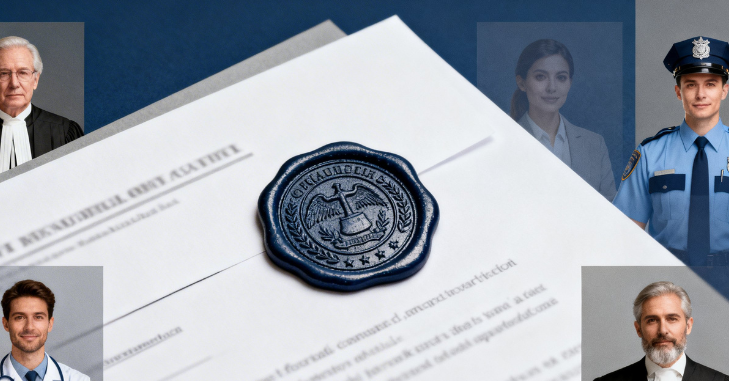
To ensure a smooth processing experience, it is essential to prepare adequately before meeting with a professional. First, it’s advisable to contact the professional in advance to discuss the purpose of your visit. When attending the appointment, bring original documents relevant to your case, as well as photocopies, unless the professional offers copying services.
If requested, be prepared to provide identification to verify your identity. Additionally, confirm any specific wording requirements beforehand to avoid any misunderstandings. This preparation not only streamlines the process but also contributes to a more productive and efficient meeting.
Why Proper Certification Matters
Incorrect certification can result in:
- Delayed applications
- Rejected submissions
- Financial loss
- Missed deadlines
Ensuring compliance protects both legal standing and administrative efficiency.
Final Thoughts
Understanding who can certify documents in the UK is essential for navigating legal, financial, and administrative processes smoothly. While many professionals may be authorised, the safest approach is to confirm the requesting organisation’s requirements before proceeding. Solicitors and notaries provide the highest level of reliability, particularly for formal or international matters.
By carefully selecting an appropriate certifier and ensuring all required details are included, you can avoid delays and ensure your documentation is accepted without issue. Proper certification supports identity verification, prevents fraud, and maintains trust within the UK’s legal and administrative systems.
Want to know about Register a Trust as a Trustee in England and Wales: HMRC Deadlines, Documentation, and Compliance Obligations Explained Check out our Legal Advice category.
FAQs
Not always. While solicitors are widely accepted, other regulated professionals may also be suitable depending on the organisation requesting the document. Always check the specific requirements first.
No. A family member, partner, or anyone living at your address cannot certify your documents, even if they are a qualified professional.
The answer to who can certify a document depends on the document’s purpose. Commonly accepted professionals include solicitors, notary public, chartered accountants, doctors, teachers, bank managers, and police officers. However, the certifier must not be related to you or live at your address.
Certifying a document means that an authorised professional has confirmed that a photocopy is a true and accurate copy of the original. The certifier signs, dates, and includes their professional details on the copy.