

Trusts are widely used in England and Wales for estate planning, tax management, and wealth protection. However, trustees must adhere to specific legal obligations to ensure compliance with the law and HM Revenue & Customs (HMRC) regulations. One crucial step in managing a trust correctly is knowing how toregistera trust as a Trustee, understanding the deadlines, and maintaining proper documentation.
This article provides a comprehensive guide to trustees in England and Wales, explaining HMRC deadlines, required documentation, and ongoing compliance obligations. It also highlights the importance of understanding the legal framework governing trusts and the potential consequences of non-compliance. By offering practical tips and resources, this guide aims to empower trustees to fulfill their responsibilities effectively and safeguard beneficiaries’ interests.
| Aspect | Details | Deadline / Frequency |
| Trust Registration | Register with HMRC via TRS | Within 90 days of creation |
| Trust Deed | Governing document with settlor, trustee, beneficiary info | At registration |
| Settlor Details | Name, DOB, NI number, contact | At registration |
| Trustee Details | Names and contacts | At registration & on changes |
| Beneficiary Details | Names, DOB, interest in trust | At registration & on changes |
| Trust Assets | Description and value | At registration & on changes |
| Income Tax Reporting | Declare all trust income | Annually |
| Capital Gains Tax | Report gains on assets | As gains arise |
| Inheritance Tax | Report transfers or settlor deaths | When applicable |
| Record Keeping | Financial & distribution records | Ongoing, 6 years recommended |
| TRS Updates | Notify HMRC of changes | Within 90 days |
| Penalties | Late registration or errors | £100 per trustee; fines or interest may apply |
What Is a Trust and Who Is a Trustee?

Before diving into the registration process, it’s essential to understand the fundamentals.
Definition of a Trust
A trust is a legal arrangement in which one party, the settlor, transfers assets to a trustee who manages them for the benefit of one or more beneficiaries. Trusts can be used for various purposes:
- Estate planning and inheritance tax mitigation
- Protecting assets for minors or vulnerable individuals
- Charitable purposes
- Business succession planning
Role of a Trustee
A trustee is responsible for managing the trust’s assets in accordance with the terms of the trust deed and in the best interests of the beneficiaries. Key duties include:
- Administering assets fairly
- Maintaining accurate records
- Filing tax returns and ensuring HMRC compliance
- Distributing income and capital according to the trust deed
Trustees must act prudently and can be held personally liable for any breach of trust.
Register a Trust as a Trustee: Why It Is Important
Registering a trust with HMRC is not merely a formality; it is a legal requirement under the Finance Act 2006. Trustees must ensure that the trust is registered to comply with tax obligations and foster transparency. There are several key reasons for registration. First, for taxation purposes, HMRC mandates registration for trusts that owe or are liable for certain taxes, including income tax, capital gains tax, and inheritance tax.
Second, the registration enhances transparency and reporting, allowing HMRC to effectively track assets and beneficiaries, thereby helping prevent tax evasion. Lastly, legal compliance is crucial; failing to register the trust can lead to penalties, fines, or even legal disputes among beneficiaries, underscoring the importance of adhering to these obligations.
HMRC Deadlines for Trust Registration
Timely registration is critical to avoid penalties. HMRC has set specific deadlines based on the type of trust and when it was created.
Deadlines for New Trusts
- Express trusts created after October 6, 2020: Must be registered within 90 days of creation.
- Existing trusts before October 6, 2020: Trustees must register if they come under the new reporting regime.
Deadlines for Specific Tax-Related Trusts
| Trust Type | Registration Deadline | Notes |
| Bare Trusts | Within 90 days | Often used for minors; only need reporting if liable for tax |
| Interest in Possession Trusts | Within 90 days | The beneficiary has the immediate right to the income |
| Discretionary Trusts | Within 90 days | Trustee discretion over income/capital |
| Settlor-Interested Trusts | Within 90 days | Settlor benefits from income or capital |
| Charitable Trusts | Not required | Charities have separate registration with the Charity Commission |
Documentation Required to Register a Trust
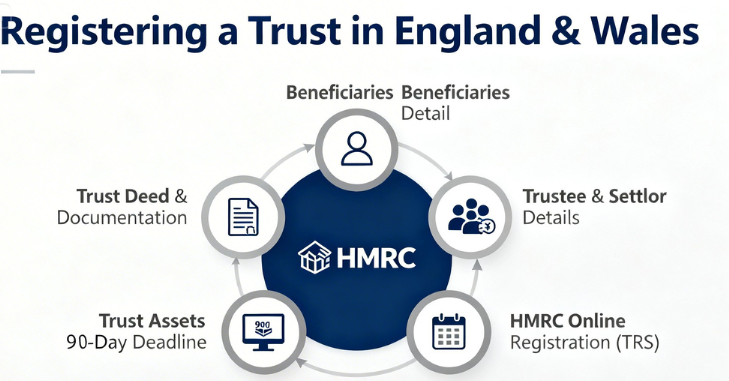
Proper documentation is essential to register a trust as a trustee with HMRC successfully. The process requires providing detailed information about the trust, trustees, settlors, and beneficiaries.
1. Trust Deed or Declaration of Trust
The trust deed or declaration of trust is a critical document that governs how the trust is to be managed. It outlines the trustees’ powers, the beneficiaries’ rights, and the trust’s overall purpose. This foundational document ensures that all parties understand their responsibilities and entitlements, thereby promoting clarity and reducing the risk of disputes.
2. Settlor Details
The settlor’s details are essential for identifying the individual who establishes the trust. This section typically includes the settlor’s name, date of birth, and contact information, as well as their National Insurance number or tax reference. Accurate information about the settlor is crucial for tax compliance and for the trust’s legal recognition.
3. Trustee Details
Trustee details encompass personal information for each appointed trustee, including names, contact details, and their legal capacity to act on behalf of the trust. This information is vital to ensure transparency and accountability in managing the trust’s assets, as trustees hold significant responsibilities and fiduciary duties toward the beneficiaries.
4. Beneficiary Details
Beneficiary details should include the full names and dates of birth of all individuals entitled to benefit from the trust. This section also outlines the nature of each beneficiary’s interest in the trust, whether they are beneficiaries of income, capital, or both. Clear documentation of beneficiaries helps prevent conflicts and ensures that the trust is administered according to the settlor’s intentions.
5. Trust Assets
The section on trust assets provides a comprehensive description of the assets held by the trust, including property, investments, and cash. Additionally, it requires an estimated value of these assets at the time of registration. This information is crucial for assessing the trust’s financial standing and tax obligations.
6. Tax Information
Tax information is a vital component of the registration process, as it details any prior or anticipated income, gains, or distributions associated with the trust. This section should include relevant tax reference numbers to facilitate compliance with HMRC requirements. Thoroughly documenting tax information helps ensure that trustees meet their obligations and avoid potential penalties.
Steps to Register a Trust as a Trustee
- Gather all trust information and documentation
- Create a Government Gateway account
- Complete the TRS registration form
- Upload supporting documents
- Submit the application
- Retain confirmation
Compliance Obligations for Trustees

Registering a trust is just the first step; trustees must also meet ongoing compliance obligations to remain in good standing with HMRC. One of the primary responsibilities involves tax filing. Trustees must declare all trust income, including interest, dividends, and rental income, for income tax purposes.
Additionally, any gains from the disposal of trust assets must be reported for Capital Gains Tax (CGT), requiring appropriate calculations for exemptions and reliefs. Some trusts are also liable for Inheritance Tax (IHT) on assets transferred into the trust or upon the death of a settlor.
Record-keeping is another crucial obligation, as trustees must maintain bank statements, investment records, beneficiary distributions, correspondence with HMRC, and annual accounts for more complex trusts.
Furthermore, trustees are required to report any changes to the trust to HMRC, including when trustees are added or removed, when beneficiaries change, when assets are transferred in or out of the trust, or if the trust becomes liable for new taxes. By fulfilling these ongoing obligations, trustees ensure that they remain compliant and that the trust operates smoothly.
Common Mistakes to Avoid

To ensure smooth registration and compliance, trustees should avoid common pitfalls:
- Using outdated trustee or beneficiary information
- Missing the 90-day registration deadline
- Failing to update TRS after changes in the trust structure
- Ignoring record-keeping obligations
- Assuming registration is optional for tax-exempt trusts
Differences Between England and Wales Trust Regulations and Other Jurisdictions
While this article focuses on England and Wales, trust regulations differ in Scotland and Northern Ireland. Key differences include:
- Scottish trusts require separate registration with HMRC and may be governed under different trust law principles
- Northern Ireland trusts follow similar HMRC requirements, but may have additional local reporting obligations
Conclusion
Understanding how to register a trust as a trustee in England and Wales is critical for legal compliance and effective trust management. Trustees must meet HMRC deadlines, maintain accurate documentation, and fulfill ongoing tax and reporting obligations.
By following best practices, trustees can minimize risks, ensure transparency, and protect both the trust and its beneficiaries. It is also essential for trustees to stay informed about changes in relevant legislation and tax regulations that may impact trust operations.
Engaging professional advice when needed can provide additional guidance on complex issues that may arise. Furthermore, maintaining clear communication with beneficiaries helps foster trust and accountability, ensuring that all parties understand their rights and responsibilities. Ultimately, diligent management of a trust not only protects its assets but also upholds the trustee’s fiduciary duties.
Want to know about No-win-No-Fee Solicitor Explained: Legal Rights, Claim Processes, and What Clients Should Know Before Filing a Case Check out our Legal Advice category.
FAQs
Trustees register online via the HMRC Trust Registration Service (TRS). Paper submissions are rarely accepted.
Trusts created after October 6, 2020, must be registered within 90 days of creation. Existing trusts brought under the reporting regime must register as soon as possible.
All trustees of express trusts liable for tax (income tax, capital gains tax, or inheritance tax) must register. Charitable trusts are generally exempt.
Registering a trust means providing HMRC with details about the trust, its trustees, settlors, beneficiaries, and assets using the Trust Registration Service (TRS). This ensures compliance with UK tax law.

