


What Is Hearsay in court? Hearsay in court is a legal concept that refers to any statement made outside the courtroom that is presented in court to prove the truth of what it asserts. It is not just any statement heard second-hand; the critical factor is that the statement is being used to establish a fact rather than merely to show its effect on the listener or explain a person’s actions. More from us: Unpaid Leave in the UK.
Courts treat hearsay with caution because the original speaker is not available for cross-examination, making it difficult to assess their credibility, accuracy, or reliability. Hearsay can appear in many forms, including spoken words, written messages, gestures, or other conduct intended to convey a message.
Despite its general inadmissibility, the law recognizes that some out-of-court statements are reliable enough to be exceptions, such as statements made under stress, statements for medical diagnosis, and records kept in the ordinary course of business. Knowing what hearsay is in court is essential for lawyers.
| Topic | Key Points | Examples / Notes |
| Definition of Hearsay | An out-of-court statement is offered to prove the truth of the matter asserted. | Spoken words, written notes, gestures intended as assertions. |
| Purpose in Court | The statement must be offered to establish a fact, not just to show its effect on the listener or explain actions. | “I left because someone shouted there was a bomb,” explains action, not the truth of a bomb. |
| Legal Definition Components | Statement: oral, written, or nonverbal; Declarant: person making the statement; Out-of-Court made outside trial; Offered for Truth: intended to prove truth. | Nodding, written note, or verbal admission. |
| Historical Background | Originated in English common law; recognized unreliability of second-hand info; codified in the U.S. 1975 Federal Rules of Evidence. | Exceptions were developed for reliable statements like dying declarations or business records. |
| Rationale for Exclusion | Lack of cross-examination; absence of oath and courtroom observation; risk of distortion. | Prevents unreliable information from influencing verdicts. |
| Statements Not Considered Hearsay | Prior statements by witnesses; opposing party statements. | Witness re-testifies prior identification; defendant’s previous admission. |
| Constitutional Implications | In criminal cases, the Sixth Amendment guarantees the right of confrontation, as clarified in Crawford v. Washington. | Defendant must have the opportunity to cross-examine testimonial statements. |
| Major Exceptions | Present sense impression, excited utterance, statements of mental/physical condition, statements for medical diagnosis, recorded recollection, business/public records, dying declarations, statements against interest. | Timely, reliable, or inherently truthful statements. |
| Hearsay Within Hearsay | Each layer must independently meet a hearsay exception to be admissible. | A witness repeating a coworker’s statement about a supervisor. |
| Civil vs Criminal Cases | Civil: hearsay rules apply without constitutional confrontation; Criminal: hearsay plus Sixth Amendment protections. | Judges evaluate differently for admissibility. |
| International Perspective | UK: Criminal Justice Act 2003; South Asia: Indian Evidence Act 1872. | Legal systems vary but share similar principles. |
| Modern Technology | Digital communications (texts, emails, social media, audio) require authentication and hearsay analysis. | Judges determine authorship and reliability. |
| Practical Application | Lawyers can object to hearsay; judges assess the definition, purpose, and exceptions. | Objections prevent unreliable evidence from influencing juries. |
| Misunderstandings | Not all second-hand statements are inadmissible; purpose and context matter. | Statements may be admissible to show the listener’s reaction or state of mind. |
| Importance of the Hearsay Rule | Preserves accuracy, fairness, individual rights, and judicial integrity. | Protect trials from rumor or unverified repetition. |
What Is Hearsay in Court?

What Is Hearsay in court? Hearsay in court refers to an out-of-court statement that a party seeks to introduce as evidence to prove the truth of the asserted matter. Essentially, it occurs when someone in the courtroom repeats what another person said outside the proceedings to show that what was said is true.
The legal system treats hearsay cautiously because the original speaker is not present for cross-examination, making it difficult to assess the accuracy, credibility, or reliability of the statement. Hearsay can include spoken words, written notes, or even nonverbal actions intended as an assertion.
While hearsay is generally inadmissible due to reliability concerns, the law allows several exceptions for inherently trustworthy statements, such as dying declarations, business records, and excited utterances. Understanding what hearsay is in court is crucial for maintaining fair trials, ensuring evidence is reliable, and protecting the integrity of judicial proceedings.
The Legal Definition of Hearsay
| Component | Description | Example |
| Statement | A statement can be oral, written, or even nonverbal conduct if the person intended it as an assertion. | Nodding to indicate agreement or writing a note claiming someone committed a theft. |
| Declarant | The declarant is the person who originally made the statement. | If John says, “I saw the suspect run away,” John is the declarant. |
| Out-of-Court | The statement must have been made outside the current trial or hearing. | A witness recounts what a friend told them yesterday. |
| Offered for the Truth | The statement must be introduced to prove that what it says is true. | Using a note to show that a suspect actually stole an item. |
Historical Background of the Hearsay Rule

- The hearsay rule originated in English common law and was adopted by many modern legal systems around the world.
- Historically, courts recognized that second-hand information is often unreliable, and reliance on rumor or repeated statements could lead to unjust outcomes.
- The hearsay rule evolved to promote fairness and accuracy in judicial proceedings, ensuring that evidence considered by judges and juries is trustworthy.
- Over time, courts developed exceptions to the rule for certain categories of statements that were deemed sufficiently reliable, such as business records or dying declarations.
- In the United States, the hearsay doctrine was formally codified in 1975 with the adoption of the Federal Rules of Evidence, which standardized evidentiary principles across all federal courts.
- This codification helped create clearer rules for admissibility while preserving judicial discretion to allow reliable out-of-court statements in specific circumstances.
The Core Rationale Behind the Hearsay Rule
The exclusion of hearsay in court is based on several fundamental concerns aimed at ensuring fairness and reliability in the judicial process. One primary concern is the lack of cross-examination. Cross-examination is widely regarded as the most effective method for uncovering the truth in the courtroom because it allows the opposing party to challenge a witness’s memory, perception, bias, and overall credibility.
Another concern is the absence of an oath and courtroom demeanor. Witnesses who testify in court do so under oath, making them legally accountable for the truthfulness of their testimony, with penalties for perjury if they lie.
Understanding the Importance of Purpose
- Not every out-of-court statement qualifies as hearsay; the key factor is the purpose for which the statement is introduced in court.
- If a statement is offered to show its effect on the listener or to explain a person’s actions, rather than to prove the truth of what it asserts, it is not considered hearsay.
- The distinction lies in whether the statement is being used as evidence of the actual event versus evidence of how someone responded to the statement.
- Example: A witness testifies, “I left the building because someone shouted there This principle ensures that statements can be used in court to provide context or explain behavior without automatically being excluded under hearsay rules.
Categories of Statements That Are Not Considered Hearsay
| Category | Description | Key Requirement | Example |
| Prior Statements by a Witness | Certain prior statements are defined as non-hearsay under the Federal Rules of Evidence even though they were made outside court. | The witness must testify at trial and be subject to cross-examination about the prior statement. | A witness previously gave a statement identifying the accused and is now questioned about that earlier statement in court. |
| Opposing Party Statements | Statements made by an opposing party are admissible when offered against that same party. | The statement must be introduced by the opposing side and attributed to the party against whom it is offered. | A defendant previously admitted guilt, and the prosecution introduces that admission during the trial. |
Constitutional Implications in Criminal Cases
- In criminal proceedings, hearsay rules are closely connected to constitutional protections afforded to the accused.
- The Confrontation Clause of the Sixth Amendment to the United States Constitution guarantees that a criminal defendant has the right to confront and cross-examine the witnesses against them.
- This constitutional safeguard ensures that testimonial evidence cannot be used without giving the defendant an opportunity to challenge the credibility, memory, and perception of the person who made the statement.
- The scope of this right was significantly clarified in the landmark Supreme Court case Crawford v. Washington.
- The Court emphasized that reliability alone is not enough; the Constitution requires actual confrontation through cross-examination when testimonial evidence is involved.
- This decision strengthened defendants’ confrontation rights and significantly reshaped how courts analyze hearsay in criminal trials, particularly when dealing with police interrogations, affidavits, and formal witness statements.
Detailed Examination of Major Hearsay Exceptions

Although hearsay is generally inadmissible, numerous exceptions exist because certain statements are considered inherently reliable.
Present Sense Impression
A present sense impression is a statement describing or explaining an event made while the event is occurring or immediately afterward. The key element is timing. Because the statement is made contemporaneously with the event, there is little opportunity for reflection or fabrication.
Excited Utterance
An excited utterance is a statement relating to a startling or shocking event made while the declarant is still under the stress of excitement caused by that event. The legal theory is that a person overwhelmed by emotion has limited capacity for deliberate misrepresentation.
Then-Existing Mental, Emotional, or Physical Condition
Statements about a person’s current state of mind, emotional condition, or physical health may be admitted to show what the person was thinking or feeling at that time. For example, a statement such as “I am afraid of him” may be used to demonstrate fear, motive, or intent.
Statements for Medical Diagnosis or Treatment
Statements made to doctors, nurses, or other healthcare providers for purposes of medical diagnosis or treatment are generally admissible. The reasoning is that patients have a strong incentive to be truthful when seeking proper medical care.
Recorded Recollection
If a witness once had personal knowledge of a matter but now cannot fully recall the details, a previously recorded statement may be read into evidence under specific conditions. The record must have been made or adopted by the witness.
Business Records Exception
Records regularly maintained in the course of a business activity are often admissible because they are created systematically and relied upon in daily operations. Examples include accounting ledgers, payroll records, inventory logs, and medical charts.
Public Records
Official government records may also be admitted under a recognized exception. These include documents such as birth certificates, property records, and certain agency reports. The rationale is that public officials are under a duty to accurately record information, and such records are maintained for official purposes.
Dying Declarations
In homicide prosecutions and certain civil cases, a statement made by a person who genuinely believes death is imminent may be admitted. The law assumes that a person who believes they are about to die is unlikely to lie.
Statements Against Interest
If a declarant makes a statement that is contrary to their own financial, legal, or penal interest, it may be admitted because people generally do not make harmful statements about themselves unless they are true.
Hearsay Within Hearsay

- Sometimes a statement introduced in court includes another out-of-court statement inside it. This situation is known as double hearsay or hearsay within hearsay.
- Double hearsay occurs when one person repeats what another person said, and that second statement is also being offered to prove the truth of what it asserts.
- Under the Federal Rules of Evidence, each layer of the statement must be analyzed separately.
- For the evidence to be admissible, each individual layer of hearsay must independently qualify under an exception or exclusion to the hearsay rule.
- If even one layer does not meet an exception, the entire statement may be excluded.
- Example:
- A witness testifies that a coworker told her that the supervisor admitted to falsifying records.
- The supervisor’s alleged admission is one layer of hearsay.
- The coworker’s repetition of that admission is a second layer of hearsay.
- Courts carefully examine both layers to ensure reliability before allowing the jury to hear the evidence.
Differences Between Civil and Criminal Cases
| Aspect | Civil Cases | Criminal Cases |
| Application of Hearsay Rules | Hearsay rules apply under the Federal Rules of Evidence | Hearsay rules apply under the Federal Rules of Evidence |
| Constitutional Protection | No confrontation right applies | The Confrontation Clause of the Sixth Amendment to the United States Constitution applies |
| Right to Cross-Examine Declarant | Not constitutionally required | Constitutionally required for testimonial statements |
| Level of Protection | Based mainly on evidentiary rules | Based on evidentiary rules plus constitutional safeguards |
| Impact on Admissibility | The judge evaluates hearsay exceptions only | Judge evaluates hearsay exceptions and constitutional confrontation requirements |
Hearsay in Other Legal Systems
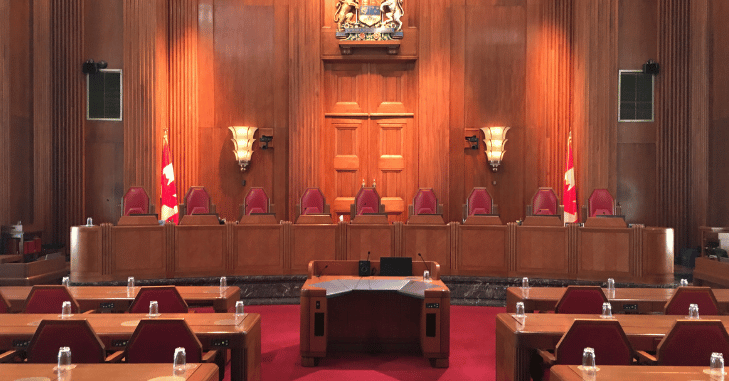
United Kingdom
In England and Wales, hearsay law was significantly modernized by the Criminal Justice Act 2003. Prior to this reform, hearsay rules were largely governed by strict common law principles that made admissibility difficult in many situations.
South Asia
In countries such as India and Pakistan, hearsay principles are primarily governed by the Indian Evidence Act 1872. This statute generally excludes hearsay but includes several statutory exceptions similar to common law traditions.
Modern Technology and Hearsay Challenges
Digital communication has introduced new complexities into hearsay analysis.
Courts must evaluate:
- Text messages
- Emails
- Social media posts
- Audio recordings
- Judges must determine authorship, authenticity, and purpose. Authentication rules often intersect with hearsay analysis.
Practical Courtroom Application
When a lawyer believes that a statement being introduced in court qualifies as hearsay, they may raise an objection during the trial to prevent it from being admitted into evidence. At that point, the judge must carefully analyze the statement and make a legal determination.
The judge first considers whether the statement fits the formal definition of hearsay under the Federal Rules of Evidence, meaning it is an out-of-court statement. Next, the judge evaluates whether the statement is being offered to prove the truth of the matter asserted, since a statement introduced for another purpose may not qualify as hearsay at all.
Common Misunderstandings About Hearsay
Many people incorrectly believe that all second-hand information is automatically inadmissible in court. In reality, hearsay doctrine is far more nuanced and technical. The key issue is not whether the information is second-hand, but how and why it is being offered in court.
An out-of-court statement is only hearsay if it is introduced to prove the truth of what it asserts. If it is offered for another purpose, such as showing its effect on the listener, explaining a person’s conduct, proving notice, or demonstrating a speaker’s state of mind, it may be admissible.
The Broader Importance of the Hearsay Rule

The hearsay rule plays a vital role in preserving:
- Accuracy in fact-finding
- Fairness in proceedings
- Protection of individual rights
- Judicial integrity
- Without limitations on hearsay, courts could be influenced by rumor, gossip, or unreliable repetition.
Conclusion
What Is Hearsay in court? Hearsay in court refers to an out-of-court statement introduced to prove the truth of what it asserts. Under the Federal Rules of Evidence, such statements are generally inadmissible unless a recognized exception applies.
In criminal law, the Sixth Amendment to the United States Constitution and the Supreme Court’s Crawford v. Washington decision provide additional constitutional safeguards. It reflects a fundamental principle of justice: decisions should be based on reliable, tested evidence rather than unverified repetition.
Want to know about Tenant Attorney Guide: Legal Rights, Eviction Defense Strategies, and How a Tenant Attorney Protects Renters from Unfair Landlords Check out our Legal Advice category.
FAQs
Hearsay in court refers to an out-of-court statement presented to prove the truth of what it asserts. It occurs when someone repeats what another person said outside the courtroom to establish a fact.
A statement is only hearsay if it is offered to prove the truth of the matter asserted. Statements introduced to show their effect on a listener, explain actions, or demonstrate a person’s state of mind are not hearsay.
Hearsay is excluded because the original speaker is unavailable for cross-examination, making it difficult to verify accuracy, credibility, and reliability. Courts also consider the lack of oath and courtroom observation and the risk of distortion.
The declarant is the person who originally made the statement outside the courtroom, whether orally, in writing, or through nonverbal conduct intended as an assertion.