

Crime does not pay, and that is truest for the people who prosecute and defend it. A criminal lawyer salary in England and Wales follows state fee rates, not client budgets. That single fact drives almost every number below. Here is what each role really earns.
Criminal defence solicitors in England and Wales typically earn £28,000 to £45,000 in their first years, moving to £50,000 or £70,000 once senior. Crown Prosecution Service lawyers sit on published bands starting near £42,000. Self-employed criminal barristers range from under £20,000 in early practice to more than £150,000 for established silks.
Criminal Law Pay at a Glance
Figures below are typical for 2026. Ranges run wide because the money that pays them arrives from three different places: legal aid contracts, public sector budgets and clients who fund their own defence.
| Role | Typical annual pay | Where the money comes from |
| Trainee solicitor at a criminal firm | £24,000 to £30,000 | Firm income, mostly legal aid |
| Newly qualified criminal defence solicitor | £30,000 to £42,000 | Legal aid contract work |
| Senior defence solicitor or supervisor | £45,000 to £70,000 | Legal aid plus private clients |
| Crown Prosecutor, CPS | £42,320 to £49,030 | Public funding |
| Senior Crown Prosecutor, CPS | £54,080 to £69,330 | Public funding |
| Pupil barrister at a criminal set | £21,000 to £28,000 award | Chambers pupillage award |
| Junior criminal barrister, five years in | £30,000 to £60,000 gross fees | Legal aid brief fees |
| King’s Counsel in criminal practice | £150,000 upwards in gross fees | Legal aid and private work |
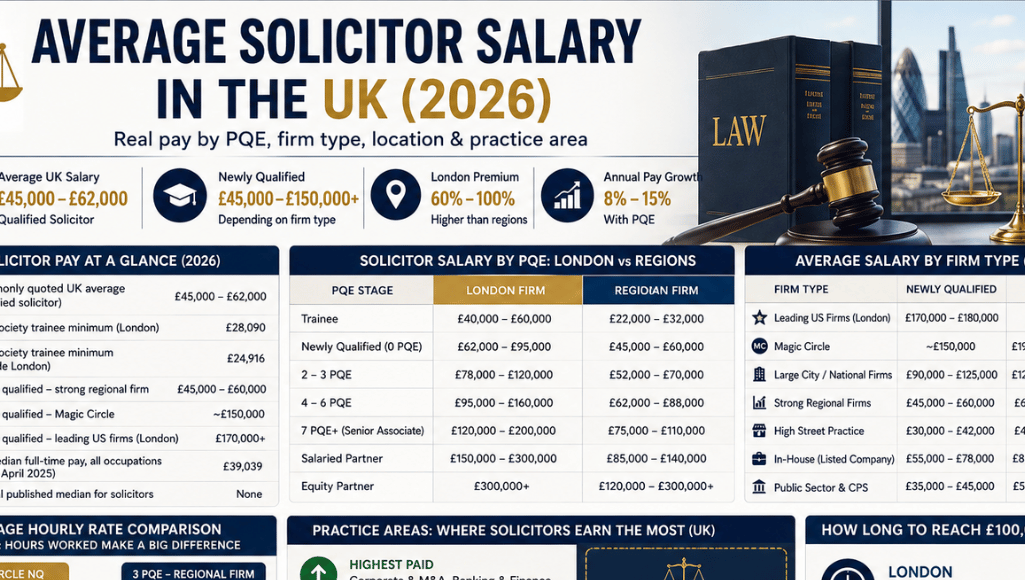
Those figures sit well below the average solicitor salary across the whole profession. Criminal work occupies the bottom of a badly stretched scale. The gap is structural.
Key Takeaways
- Legal aid fee schemes, set by government, cap what most criminal firms can pay their staff.
- The CPS publishes its bands, so prosecution pay is the most transparent number in the field.
- A barrister’s gross fee income is not take-home pay. Chambers rent, VAT and no employer pension all bite.
- Private paying work and higher rights of audience are the two reliable ways to earn more.
- A newly qualified City corporate lawyer can out-earn a criminal defence peer by four times.
What a Criminal Defence Solicitor Earns

Entry pay is modest. Trainees at legal aid firms often start on £24,000 to £30,000, and some high street practices pay less than that outside London. Graduates weighing up law graduate jobs across different practice areas should price this in before they commit.
Qualification helps, but not dramatically. Most newly qualified criminal defence solicitors land between £30,000 and £42,000, with London adding roughly £5,000 to £8,000. For context, the Office for National Statistics put median gross annual pay for full-time employees at £39,039 in April 2025. So a freshly qualified specialist earns close to the national middle. Six years of training bought very little.
Criminal Lawyer Salary Progression is slow and tied to supervision. Ten years in, a duty solicitor running their own caseload and supervising juniors usually reaches £45,000 to £60,000. Partners and department heads at busy regional firms can clear £70,000. Much of that depends on whether the firm wins private work alongside its Legal Aid Agency contract.
What The CPS Pays its Prosecutors
The Crown Prosecution Service publishes its own numbers. That makes prosecution the easiest side of criminal law to price. According to CPS legal staff data released in May 2025, a Crown Prosecutor earned £42,320 to £46,780 nationally in the 2024 to 2025 financial year. London bands ran from £44,570 to £49,030. Senior Crown Prosecutors sat on £54,080 to £61,650 nationally and up to £69,330 in London.
The CPS pays the same whether you qualified as a solicitor or a barrister. What you get on top of the headline figure matters more than most people expect:
- A Civil Service pension, worth a large slice of salary that private criminal firms rarely match.
- Paid holiday, sick pay and parental leave, none of which a self-employed barrister receives.
- Fixed hours and a caseload someone else allocates, instead of an overnight rota.
Criminal Barrister Earnings and The Money You Never See

Headline barrister figures mislead badly. Chambers report gross fee income, and the deductions are heavy. Rent and clerks’ fees swallow 15 to 20 per cent. Then come tax, VAT accounting, insurance, travel and robes. A junior with £45,000 of billed fees may keep barely £28,000 once the year settles. Nobody warns you.
Timing hurts too. Crown Court legal aid fees often arrive months after a trial finishes. Worse, a case that cracks on the morning of trial pays a fraction of the work put in. No wonder the criminal Bar looks so volatile early on. Silks who reach £150,000 or more have usually survived a decade of thin years first.
Duty Solicitor work and The Police Station Fixed Fee
Nowhere do the economics show up more plainly than on the duty rota. The Legal Aid Agency pays a fixed fee for a police station attendance whatever the hour. So a 3 am call-out to a custody suite earns the same as a tidy afternoon appointment. Ministry of Justice reforms moved most schemes to roughly £224 outside London and £264 in London, before VAT.
- One fixed fee covers advice, attendance and the interview, however long it runs.
- Only when costs pass an escape fee threshold, roughly three times the fixed fee, can a firm bill hourly rates.
- Youth Court work carries an enhanced fee of £548.33 before VAT for the most serious offences.
- Firms therefore pay salaries from a fee they cannot negotiate, which is the real ceiling.
Why Criminal Law Pays Less than Commercial Law

The buyer is different. A corporate client with a £4bn merger will pay whatever the hourly rate demands, because the deal dwarfs the bill. A defendant in a magistrates’ court has no money, so the state pays instead, at rates set by government policy rather than by anything resembling market demand. More from us: Pay Court Fine in the UK.
| Measure | Criminal defence | City commercial |
| Newly qualified salary | £30,000 to £42,000 | £110,000 to £180,000 |
| Who pays the bill | Legal Aid Agency | Corporate clients |
| Who sets the rate | Government fee schemes | The firm and the market |
| Billing method | Fixed fee per case | Hourly, in six-minute units |
Fee rates also lagged inflation for years, which squeezed firms from both ends. Both the Bar Council and the Law Society have warned that the resulting exodus leaves fewer duty solicitors covering more police stations. Pay is the mechanism, and court delay is the visible symptom. Both worsen each year.
How to Raise a Criminal Lawyer Salary

You can move the number, but only by changing what funds your work. Five routes actually shift it:
- Gain higher rights of audience and appear in the Crown Court yourself, so the advocacy fee stays in the firm.
- Build a privately paying caseload in fraud, regulatory, sexual offence or serious motoring work.
- Move in-house to the CPS or a regulator such as the SRA for a published band and a pension.
- Take a supervisor or head of department role, where billing targets and management pay combine.
- Cross into an adjacent field, since the work of a human rights lawyer often draws on the same court skills.
Specialising early beats waiting. Fraud and financial crime practitioners routinely earn double their general crime colleagues by the ten-year mark.
Conclusion
The Criminal Lawyer Salary UK 2026 picture is mixed. Criminal defence solicitors generally start on modest salaries and progress gradually, while CPS lawyers benefit from clearer pay bands, pensions, and public-sector benefits. Barristers can eventually earn much more, but their income is less predictable and gross fees do not equal take-home pay.
Ultimately, the best earning potential comes from experience, private clients, specialist areas such as fraud and financial crime, and senior positions. Anyone considering criminal law should look beyond the headline salary and compare legal-aid exposure, career progression, benefits, workload, and long-term earning potential
Frequently Asked Questions
Not compared with commercial practice. It rewards people who want court time from year one, and it can reach a comfortable £60,000 to £80,000 with private work. Anyone chasing a high income should look elsewhere.
Eventually, yes, though the first five years are usually worse. A successful criminal barrister overtakes an employed solicitor somewhere around the eight to twelve year mark, once instructions and brief fees grow. The crossover is late.
A King’s Counsel in heavy fraud can bill several hundred thousand pounds in gross fees a year. On the employed side, senior CPS management and partners at large defence firms top out nearer £90,000 to £120,000.
Roughly six years from starting a law degree: three years of study, the SQE or Bar course, then a training contract or pupillage. Criminal seats are competitive despite the pay, because the courtroom exposure comes fast.